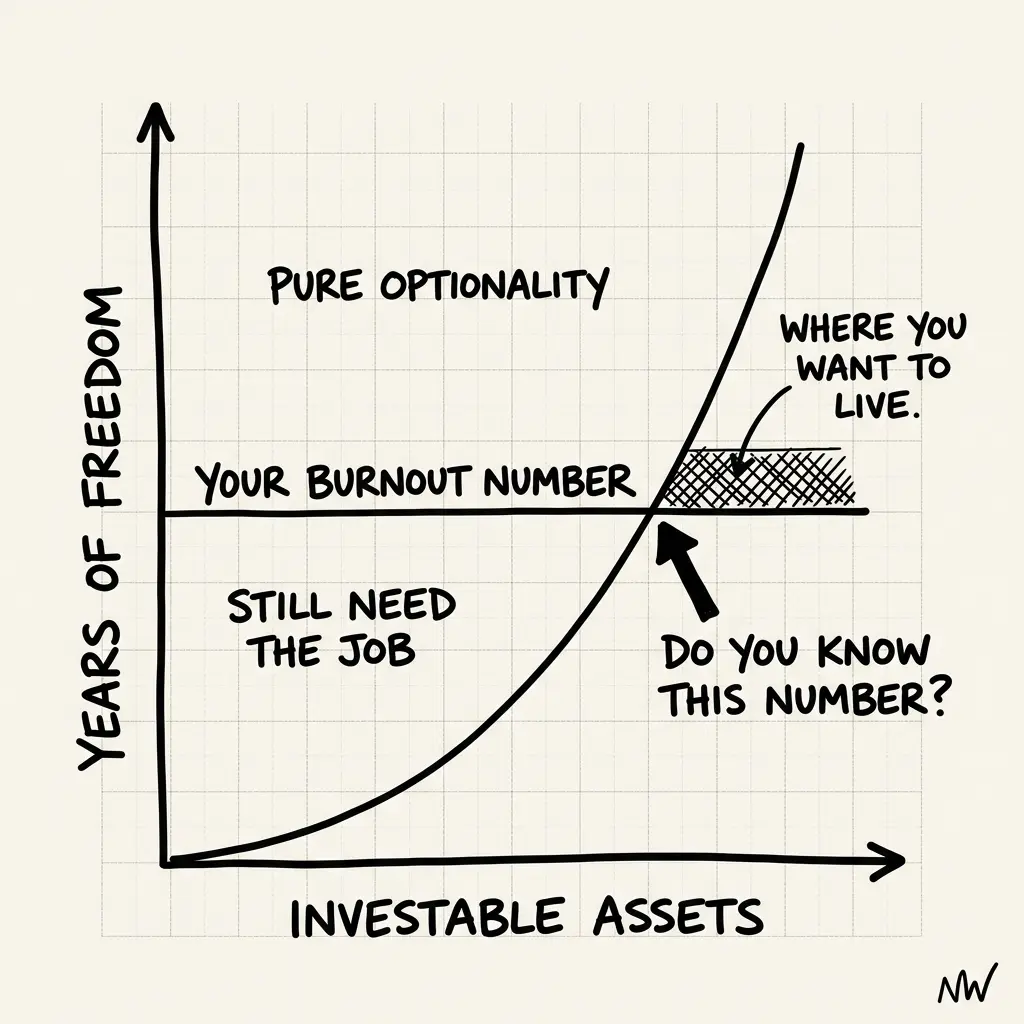
Not as income. As wealth. Most high earners can't answer that question — and the gap between what you earn and what you build is larger than you think.
Four questions. One number that tells you if you're ahead or behind.
Working across borders?
H-1B, green card, or living abroad — the HENRY picture is different when you have accounts in two countries.
FBAR, PFIC exposure on Indian mutual funds, RSU sourcing across a border, 401K decisions for uncertain timelines. There's a separate assessment built for that complexity.
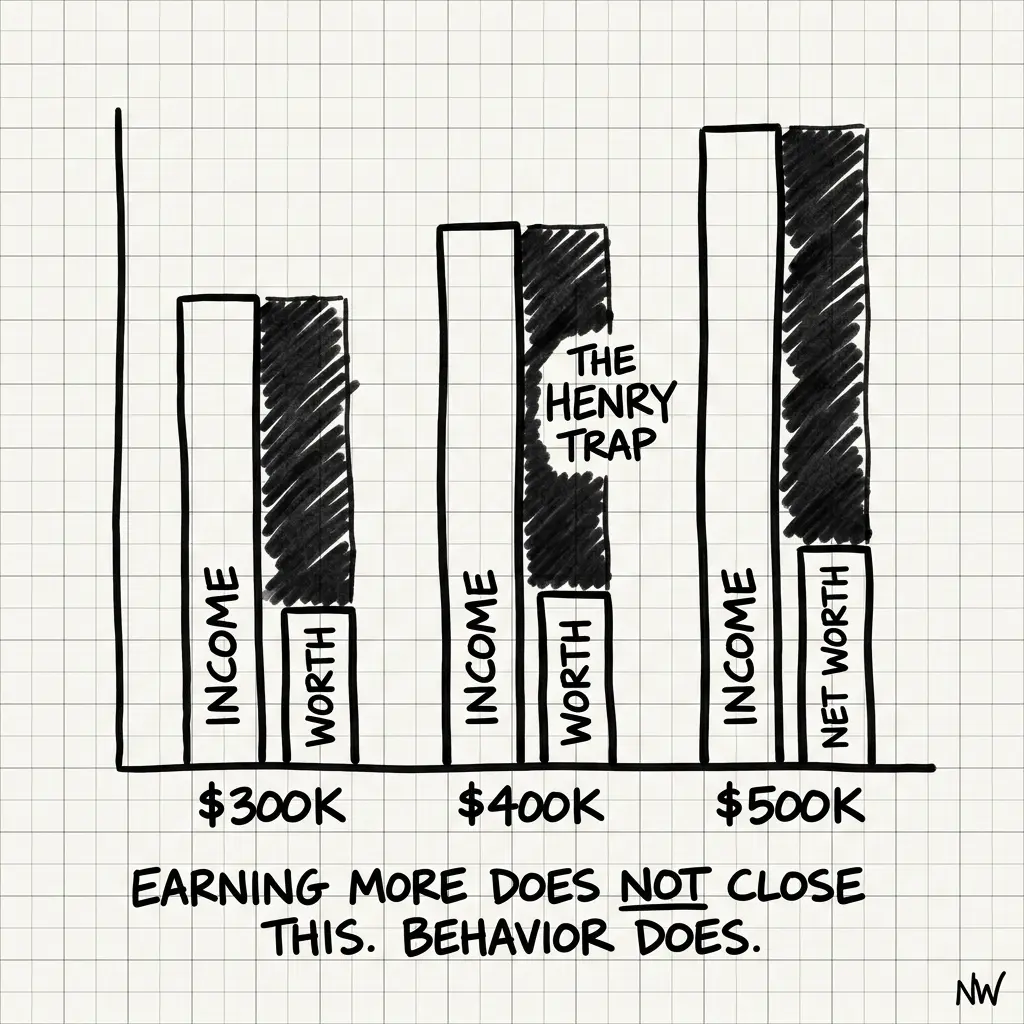
For professionals earning $200K–$400K, the Federal Reserve Survey of Consumer Finances (2022) shows a median wealth-to-income ratio of 3.5–5× at ages 35–45. If your ratio is below 2×, you're accumulating wealth significantly slower than your peers — typically not from insufficient income, but from savings rate and tax efficiency gaps.
Three structural reasons: lifestyle spending scales with income rather than lagging it; complex compensation (equity, deferred comp, bonuses) makes true savings rate calculation opaque; and most financial tools aren't built for income complexity above $200K. The result is high earnings with underbuilt wealth — a gap that only becomes visible when you benchmark against peers.
The standard benchmark is 4× your annual income in net assets by age 40. At $300K income, that's $1.2M by 40. Most high earners fall short not from insufficient income but from three fixable problems: a spending baseline that grew with every raise, insufficient use of tax-advantaged accounts, and no wealth-to-income ratio target to work toward.