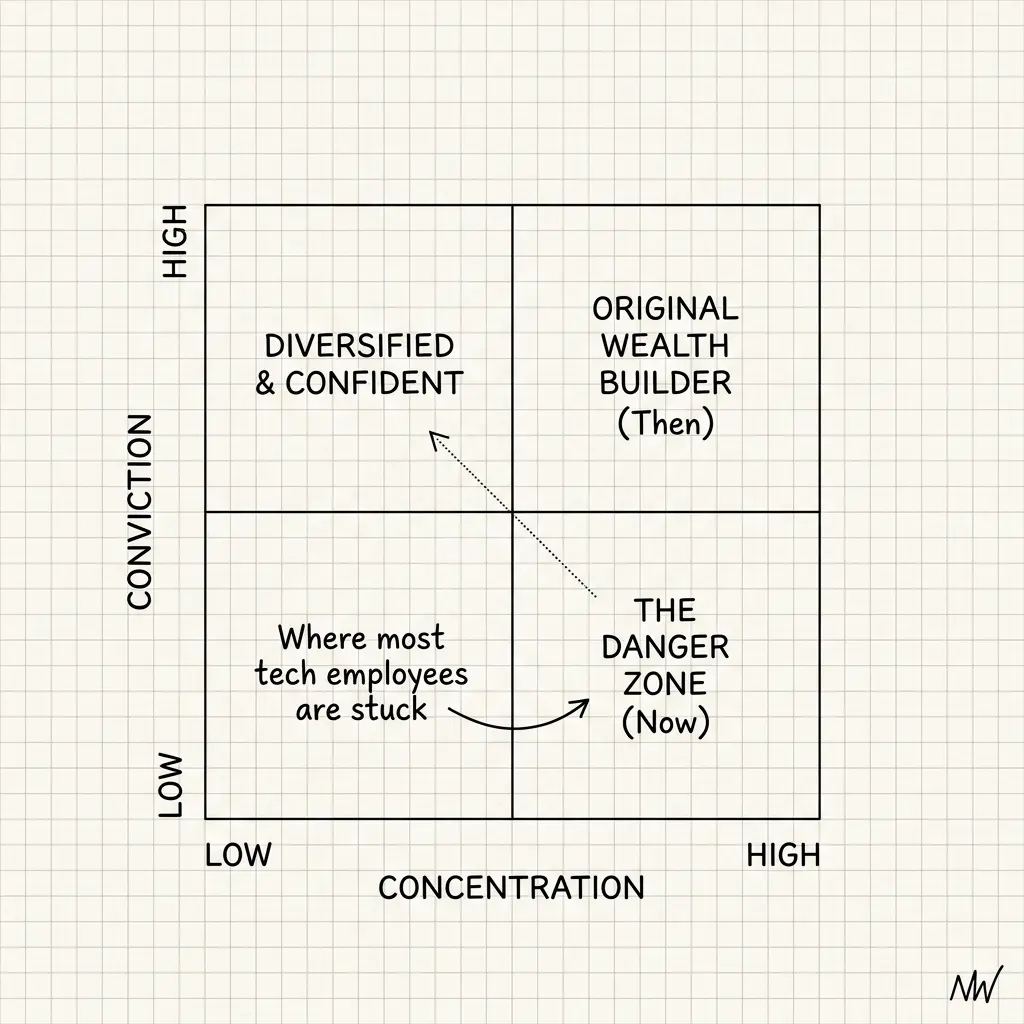
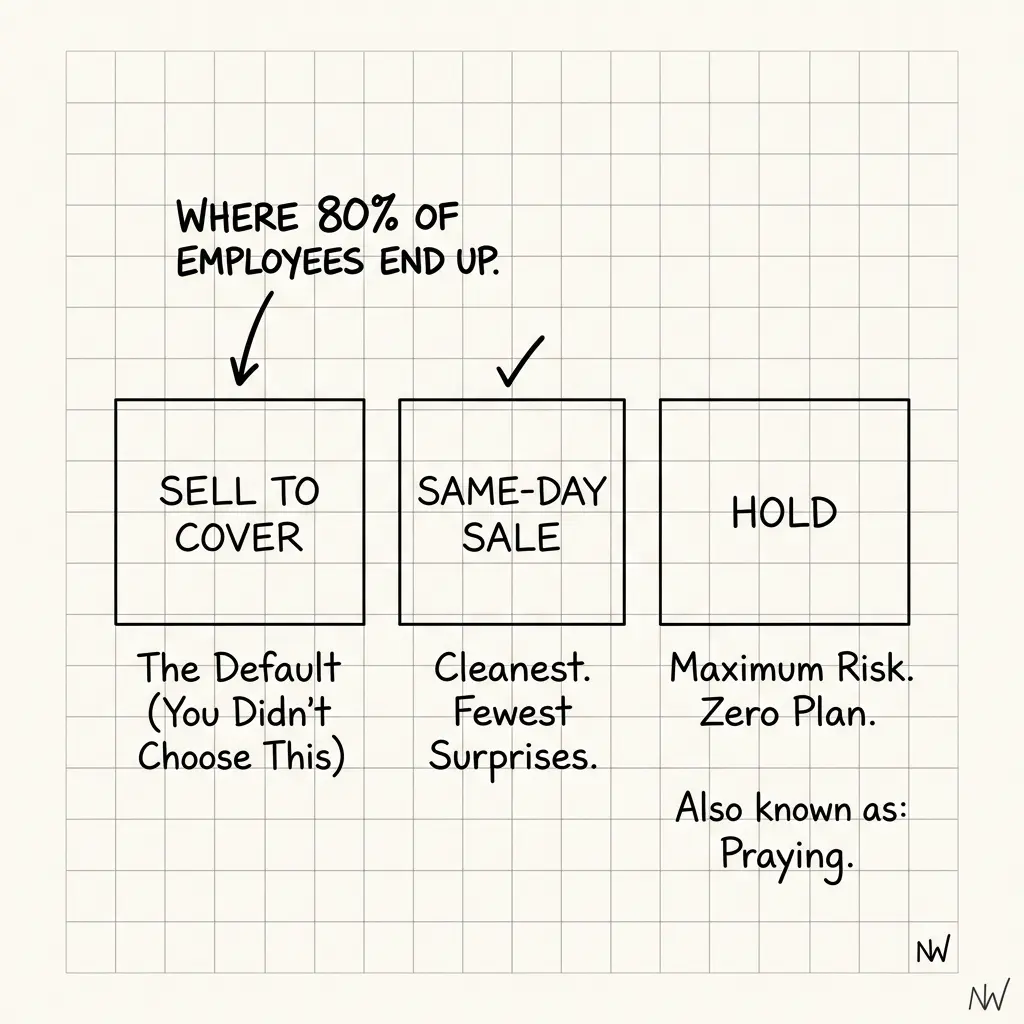
Most tech employees don't. The equity arrives, gets held by default, and concentration compounds quietly until a correction makes the decision for you.
Four questions. One number that tells you if you're ahead or behind.
RSUs across a border?
RSU sourcing allocation, 30% NRA withholding, and multi-jurisdiction equity tax — the H-1B and expat picture is a different problem.
When equity vests across a country move, US workday sourcing allocation determines your tax bill in two jurisdictions simultaneously. There's an assessment built for that.
The standard financial planning guidance is yes — at vest, RSUs become ordinary income and you already have concentrated employer exposure through your salary. Keeping them requires a specific thesis: you believe the stock has significant upside AND you've modeled the concentration risk. Most tech employees don't keep RSUs by design — they keep them by default, which is not the same thing.
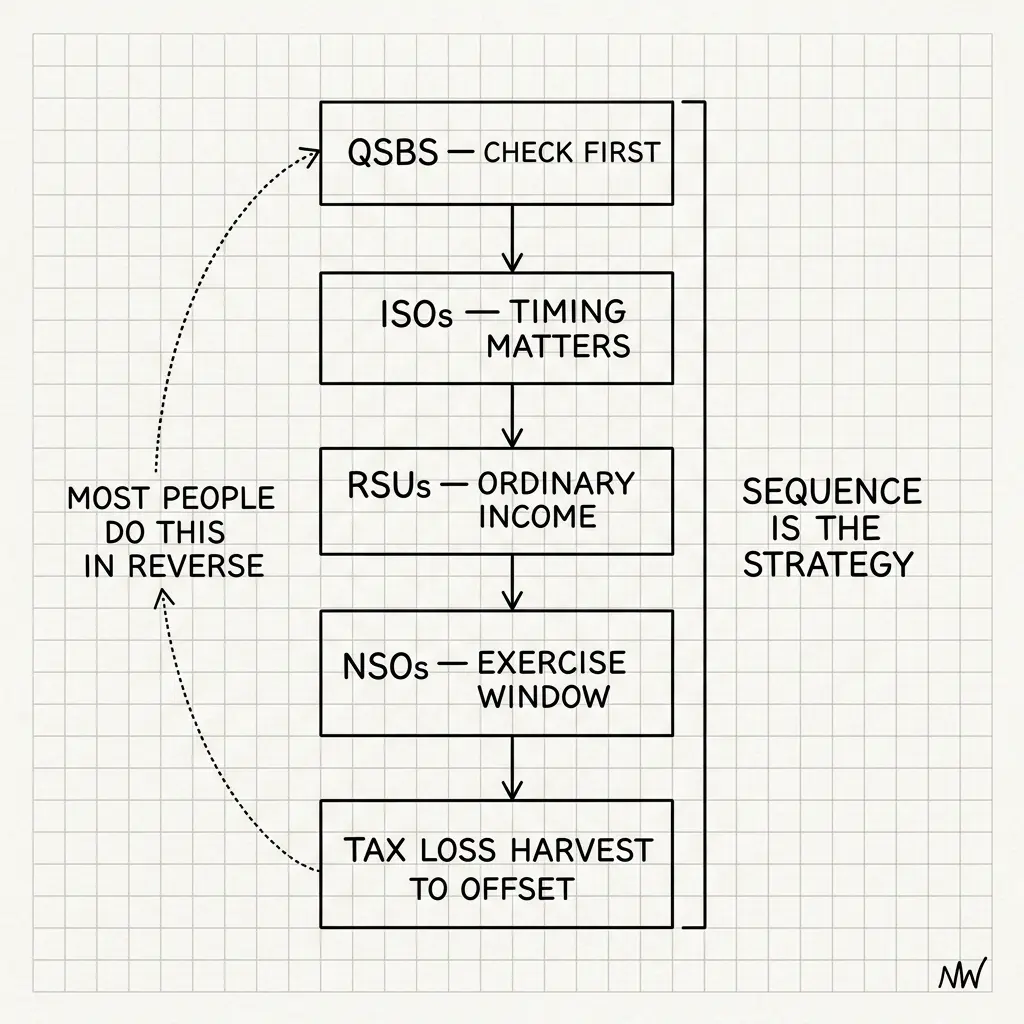
ISOs trigger Alternative Minimum Tax on the spread between exercise price and fair market value, even if you don't sell. For high-income tech employees, this creates a tax trap: exercise too many ISOs in a high-income year and you owe AMT immediately, even on gains you haven't realized. The optimal strategy is to model your AMT crossover point for the current tax year and exercise ISOs in tranches that stay within that threshold.
Most financial planners use 5–10% as the maximum single-stock allocation for a disciplined portfolio. Tech employees with unvested RSUs often have implicit concentration of 40–80% when counting unvested equity at current fair market value. The key insight: you're already 100% exposed to your employer's performance through your salary — adding equity concentration compounds that single-point-of-failure risk.